
Practice Test 3
You're reversing your vehicle. What should you do while the audible warning device is operating?
How does alcohol affect your driving?
Why should you check your right-hand mirror just before turning right from a main road into a side road?
What can be expected after drivers complete a Driver Certificate of Professional Competence (Driver CPC)?
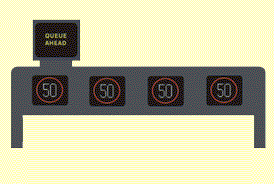
What's an advantage of progressive braking?
It's raining. Why would a motorcyclist steer around drain covers on a bend?
You're carrying a bus full of passengers. What must you do if you see smoke coming from the engine compartment?
What should you wear when making a walk-round check of your coach?
In which type of weather is spray-suppression equipment particularly useful?
You're driving at night. Why should you ensure that all your lights are clean and working correctly?
You're driving at 50 mph (80 km/h) on a dry, level road. What gap should you leave between your vehicle and the one in front?
You've stopped at the scene of an incident where there are casualties. What should you do to help while waiting for the emergency services to arrive?
Your vehicle is fitted with an anti-lock braking system. What's it designed to allow you to do?
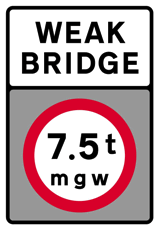
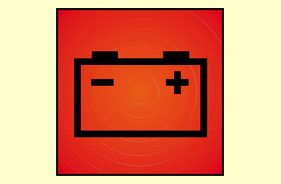
Your vehicle is fitted with air-assisted hydraulic brakes. What would warn you that there isn't enough air in the system?
When will your reactions be slower?
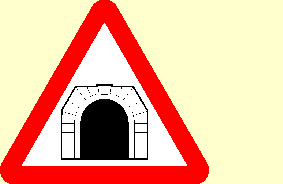
You're driving in a built-up area. Your vehicle is fitted with an audible warning device that sounds when it's reversing. When must you turn off this alarm?
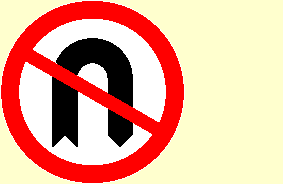
On motorways, you're usually driving at higher speeds for long distances. What effect can this have on your tyres?
Which vehicles are most likely to be affected by side wind?
What should you do if the brake air-pressure warning light comes on while you're driving?
Under EU drivers' hours regulations, a 45-minute break must be taken after 4.5 hours of driving. What shorter breaks can this be split into?
You've stopped at a pelican crossing. What should you do if the lights have changed to green but a disabled person is still crossing?
What effect will drinking alcohol have on your driving?
Why can visibility be worse when driving at high speed in wet weather?
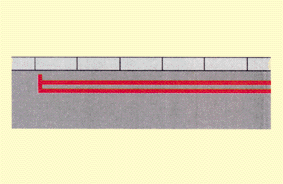
What must you do before you leave your vehicle?
You're following a cyclist. What should you do if you wish to turn left a short distance ahead?
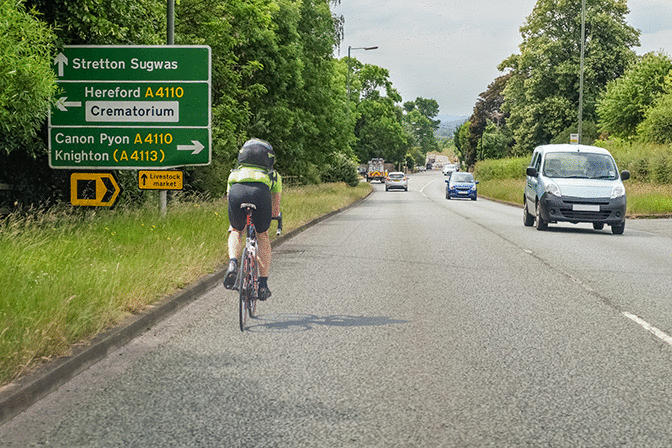
You're on a motorway and there's a strong side wind. Which vehicle is particularly at risk?
You're driving a long vehicle on a two-lane road. What should you do if you want to turn left into a narrow side road?
You're driving along a motorway. What should you do if the air-pressure warning device starts to operate?
You've been driving non-stop since 5.00 am. The time is now 9.30 am. Under EU rules, what length of break must you take?
What's the purpose of the oil filter?
Why should you check your tyres more frequently on a coach with three axles?
Which large vehicles are more likely to damage the road surface?
What are traffic officers authorised to do?
You arrive at the scene of an incident and someone is unconscious. What's the first thing you should do to help them?
Not enough to pass :-(
You have answered 0 correct out of 40 question(s).
What's Next?
Review your answers
See which answers you chose and what the correct answers are.
Study Guide
Review all the correct answers.