Practice Test 4
What can you do to reduce environmental damage caused by your vehicle?
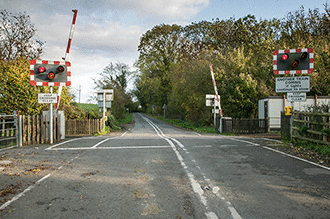
What should you do if the red lights start flashing as you approach a level crossing?
It’s dry but very windy. On the motorway, you see a car towing a large caravan in the middle lane. You then move onto a long, open stretch of single carriageway, where you pass a motorcyclist. Later, you’re travelling behind a long vehicle and want to overtake. Once in town, there are trams directed by traffic lights and you have to drive across their tracks. Further on, a bus is signalling its intention to pull out from a bus stop.
What do you need before you can legally use a motor vehicle on the road?
What should you do to avoid fuel spillage?
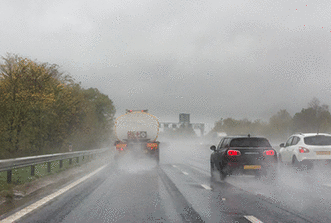
In which conditions will your overall stopping distance increase?
You have stopped in an emergency refuge area. What must you do before you rejoin the carriageway?
What can seriously reduce your ability to concentrate?
When will a new car need its first MOT test?
You have a two-hour drive to make on a motorway. You have a cold and your nose is slightly blocked. You take an off-the-shelf cold remedy to help reduce the symptoms. It’s a cold and dull day, and the car heater is on. You also turn on your dipped headlights. An hour into the boring journey, you begin to feel drowsy.
When will you feel the effects of engine braking?
You're driving on a wet road. What should you do if you have to stop your vehicle in an emergency?
Who may use toucan crossings?
You want to turn right from a main road into a side road. What should you do just before turning?
Why should you use your mirrors when you see a hazard ahead?
Why are vehicles fitted with rear fog lights?
You witness a road traffic incident involving three vehicles. You stop your vehicle and quickly place a warning triangle on the road. Then you telephone the emergency services. You check on the people involved. Two people are slightly injured and another is in shock. You stay with them until the emergency services arrive. While paramedics check the three casualties, you explain the situation to the police and offer your own contact details. The officers then speak to the casualties.
Your car breaks down on a level crossing. What's the first thing you should do?
You’re driving behind a cyclist. The road has potholes and cracks. Further ahead, there’s a roundabout. A horse rider is approaching it in the left-hand lane. In a built-up area with street lights, you see a school sign with a flashing amber signal. There are no speed-limit signs. Later, you stop at a pedestrian crossing where the lights are red. The person crossing carries a red-banded white stick and has a guide dog wearing a red-and-white checked harness.
What must you do if your eyesight has become very poor and you're no longer able to meet the driver's eyesight requirements?
You’re driving behind a cyclist. The road has potholes and cracks. Further ahead, there’s a roundabout. A horse rider is approaching it in the left-hand lane. In a built-up area with street lights, you see a school sign with a flashing amber signal. There are no speed-limit signs. Later, you stop at a pedestrian crossing where the lights are red. The person crossing carries a red-banded white stick and has a guide dog wearing a red-and-white checked harness.
What's likely to happen if you use a hands-free phone while you're driving?
How should a load be carried on your roof rack?
What should you do when you're driving in snowy conditions?
You're driving with your front fog lights switched on. What should you do if the fog has cleared?
You’re driving in heavy traffic. It has rained, but now bright sun is causing glare on the wet road. A car overtakes, then pulls back sharply into the traffic just in front of you. Further on, there’s a roundabout with two lanes on approach. You need to take the first exit, turning left. A large vehicle in front signals left but straddles both lanes. The traffic is still heavy, and there’s a zebra crossing up ahead. People are waiting to cross.
How can you reduce the environmental harm caused by your motor vehicle?
What will happen to your car when you drive up a steep hill?
Which lights should you switch on when daytime visibility is poor but not seriously reduced?
You’re driving in heavy traffic. It has rained, but now bright sun is causing glare on the wet road. A car overtakes, then pulls back sharply into the traffic just in front of you. Further on, there’s a roundabout with two lanes on approach. You need to take the first exit, turning left. A large vehicle in front signals left but straddles both lanes. The traffic is still heavy, and there’s a zebra crossing up ahead. People are waiting to cross.
What should you do if you think the driver of the vehicle in front has forgotten to cancel their right indicator?
What should you do when there's an obstruction on your side of the road?
What's the national speed limit on a single carriageway road for cars and motorcycles?
You're travelling on a motorway in England. When must you stop your vehicle?
You witness a road traffic incident involving three vehicles. You stop your vehicle and quickly place a warning triangle on the road. Then you telephone the emergency services. You check on the people involved. Two people are slightly injured and another is in shock. You stay with them until the emergency services arrive. While paramedics check the three casualties, you explain the situation to the police and offer your own contact details. The officers then speak to the casualties.
Not enough to pass :-(
You have answered 0 correct out of 40 question(s).
What's Next?
Review your answers
See which answers you chose and what the correct answers are.
Study Guide
Review all the correct answers.