Driving Theory Test | Driving Theory Test | Start Practicing For Free Today
All Tests
Progress 0%
1 2 3 4 5 6 7 8 9 10 11 12 13 14 15 16 17 18 19 20 21 22 23 24 25 26 27 28 29 30 31 32 33 34 35 36 37 38

0 Correct 0 Incorrect
Total Questions 38
Passing Marks 75%

Overall Progress


0%

View Stats
Challenge Bank

Alertness

What should you do before riding a motorcycle you've never ridden before?

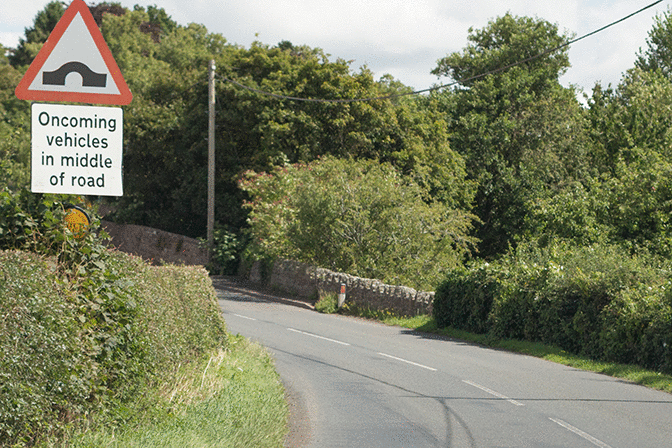
What should you do as you approach this bridge?

www.drivingtheorytest.uk - Alertness - What should you do as you approach this bridge? You should slow down and be cautious. Hump bridges are often narrow and there may not be enough room for you to pass an oncoming vehicle at this point. Also, there's no footpath, so be aware of pedestrians in the road.

What should you do to move off safely from a parked position?

What will happen if you become very cold while you're riding your motorcycle?

Why can it be helpful to have mirrors on each side of your motorcycle?

When riding some motorcycles, your shoulders and arms can obstruct your view in the mirrors. What can you do to overcome this difficulty?

What should you do before making a U-turn?

What should you do if you’re riding at night and are dazzled by the headlights of an approaching vehicle?

Why should you check over your shoulder before you change lanes in busy, slow-moving traffic?

What should you do before slowing down or stopping your vehicle?

You've been waiting for some time to make a right turn into a side road. What should you do just before you start turning?

What should you do if you're riding at night and are dazzled by the headlights of an oncoming car?

Why are these yellow lines painted across the road?

www.drivingtheorytest.uk - Alertness - Why are these yellow lines painted across the road? These lines are often found on the approach to a roundabout or a dangerous junction. They give you extra warning to adjust your speed. Look well ahead and do this in good time.

You're turning right at a large roundabout. What should you do before you cross a lane to reach your exit?

You're about to turn right. What should you do just before you turn?

Where should you avoid overtaking?

The morning is clear and fine, but very cold. You’re riding your motorcycle and using dipped headlights. There’s an unmarked junction. You look over your right shoulder before turning right. Ahead, there’s a dip in the road. Later, a school crossing patrol signals you to stop while children are crossing.

You're waiting to turn right at the end of a road. What should you do if your view is obstructed by parked vehicles?

What should you do if your mobile phone rings while you're driving or riding?

What should you do when you're approaching traffic lights that have been green for some time?

The morning is clear and fine, but very cold. You’re riding your motorcycle and using dipped headlights. There’s an unmarked junction. You look over your right shoulder before turning right. Ahead, there’s a dip in the road. Later, a school crossing patrol signals you to stop while children are crossing.

The morning is clear and fine, but very cold. You’re riding your motorcycle and using dipped headlights. There’s an unmarked junction. You look over your right shoulder before turning right. Ahead, there’s a dip in the road. Later, a school crossing patrol signals you to stop while children are crossing.

You're riding a motorcycle that's towing a trailer. What should you do before turning right onto a dual carriageway?

What does the term ‘lifesaver’ mean?

You're riding your motorcycle on an urban road. What must you do before stopping on the left?

What should you do when you see this road sign ahead?
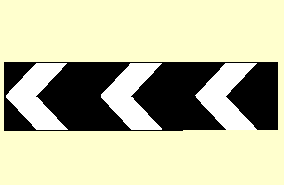
www.drivingtheorytest.uk - Alertness - What should you do when you see this road sign ahead? Always look for any advance warning of hazards, such as road signs and hazard warning lines. Use this information to plan ahead and to help you avoid the need for late, harsh braking. Your motorcycle should be upright and moving in a straight line when you brake. This will help you keep maximum control when dealing with the hazard.

You're about to emerge from a junction. Your pillion passenger tells you it's clear. When should you rely on their judgement?

What should you do if you see an incident on the other side of the motorway?

You’re riding at night. You have your headlights on main beam. When should you dip your headlights if another vehicle overtakes you?

You're turning right on a multi-lane roundabout. When should you take a lifesaver glance over your left shoulder?

The morning is clear and fine, but very cold. You’re riding your motorcycle and using dipped headlights. There’s an unmarked junction. You look over your right shoulder before turning right. Ahead, there’s a dip in the road. Later, a school crossing patrol signals you to stop while children are crossing.

You're riding a motorcycle on the road. What should you do before using your mobile phone?

Why should you use your mirrors when you see a hazard ahead?

The morning is clear and fine, but very cold. You’re riding your motorcycle and using dipped headlights. There’s an unmarked junction. You look over your right shoulder before turning right. Ahead, there’s a dip in the road. Later, a school crossing patrol signals you to stop while children are crossing.

What does this curved arrow road marking mean?
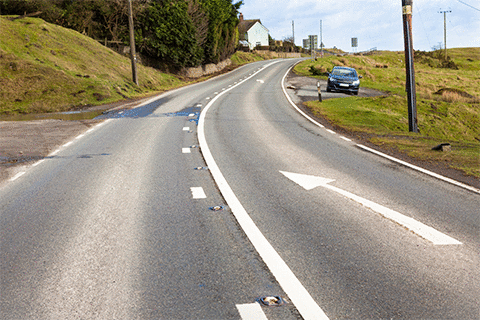
www.drivingtheorytest.uk - Alertness - What does this curved arrow road marking mean? In this picture, the road marking shows that overtaking drivers or riders need to return to the left. These markings show the direction drivers must pass hatch markings or solid double white lines. They're also used to show the route that high vehicles should take under a low arched bridge.

You're following a large vehicle. Why should you stay a safe distance behind it?

What's the ‘lifesaver’ when riding a motorcycle?

When should you check your blind spots?

Not enough to pass :-(

0%

You have answered 0 correct out of 38 question(s).


What's Next?

Review your answers


See which answers you chose and what the correct answers are.

Challenge Bank


Go through all your mistakes in all the tests you've taken so far.

Wrong answers

Study Guide


Review all the correct answers.


Question: {counter}

{question}

    {options}